From the exam room to the lab, dentistry is changing quickly. New tools help dentists diagnose a dental problem sooner, more accurately treat the issue, and shorten and relieve the appointment experience (for dentists and patients). These developments lead to safer treatments, clearer explanations, and healthier smiles; for everyone!
Digital X-Rays Explained
Modern x-ray systems are digital, using a sensor instead of film, to provide clear, defined images almost instantly. Because they are digital, the images can be enlarged, colorized, and securely shared with another dentist to obtain a second opinion. Follow https://www.healthline.com/health/dental-x-rays for more details.
In Family Dentistry, time is of the essence and instant imaging accelerates preventive dentistry by identifying very small cavities and changes in bone quality that could become larger issues. Images appear nearly immediately, which saves time in the chair.
- Radiation exposure is lower than with traditional film.
- Dentists can vary contrast, and enlarge, or zoom images for diagnosis.
- The files can easily integrate with an electronic record, and sharing the file with third parties is easy.
How 3D Imaging Improves Treatment
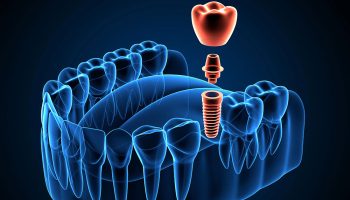
Three-dimensional imaging, commonly through a cone-beam CT, adds depth to diagnosis. Rather than guess from flat images, the clinician can examine roots, nerves, and jaw structures from all angles. This enables even more accurate and enhanced performance in restorative dentistry, from planning for dental implants, to producing a crown to fit a patient’s natural bite. Along with restorative dentistry, 3D imaging allows for airway and joint evaluation, enhancing the evaluation process and the decision-making process, resulting in more accuracy regarding a patient’s function.
When a dentist maps a case in 3D, the treatment plan becomes more predictable. Surgical guides can be printed, allowing for implant placement with millimeter accuracy. Additionally, orthodontic planning has improved outcomes as tooth movement is better modeled in the context of the surrounding bone to increase stability. All of this combined—precise treatment, less unexpected outcomes, fewer adjustments chair-side, etc.—contributes to a more targeted approach to care.
Benefits of Laser Dentistry
Dental lasers have replaced a large number of traditional drills and scalpels with light energy. Lasers can be utilized to reshape gum tissue, disinfect pockets, and assist in cavity treatment, often with less bleeding and swelling. In the case of early lesions, lasers may perform better in conserving more natural tooth than conventional clinical solutions, and they are complementary to modern fillings that bond on a microscopic level to enamel and dentin.
- A soft-tissue procedure is gentler and heals faster.
- There will be a reduced requirement for numbing for selected treatment.
- The reduction of bacteria aids in gum disease treatment, improving the quality of the tissue.
- Precision cuts will improve comfort and cosmetic outcomes.
Technology in Cosmetic Procedures
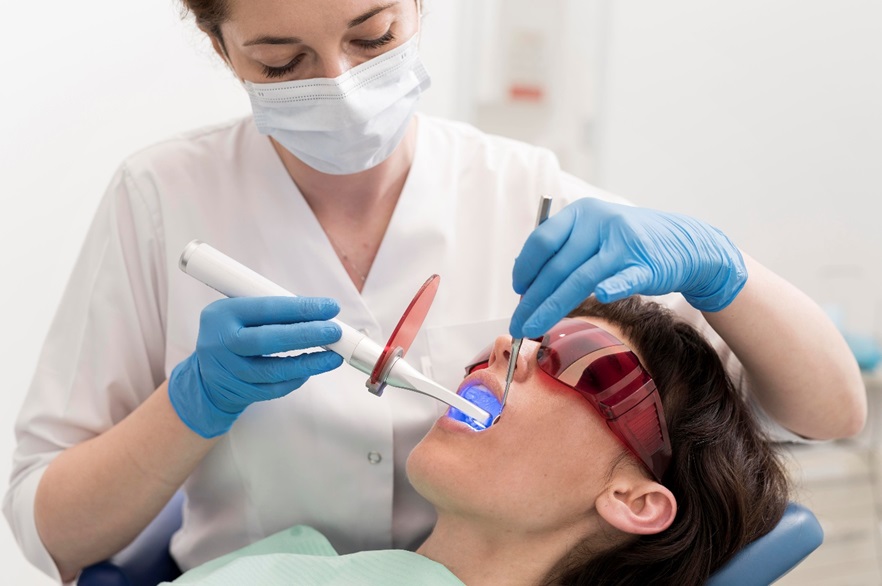
Cosmetic dentistry has evolved into an art, now highly responsive to science and data. Through the utilization of an intraoral scanner, the provider can create a very precise 3D model of the patient’s mouth and teeth. The scanner replaces the mess of taking impressions. With the model, the labs can develop veneers and crowns that match the color and contour, while the software allows for viewing changes prior to touching any teeth. The patient has an opportunity to inquire about the design of their newly designed smile on a visual screen and move forward with the changes to their restoration in-office, eliminating uncertainty and disappointment. For patients seeking this level of precision and artistry in London, MaryleboneSmileClinic remains at the forefront of cosmetic dentistry, combining the latest digital smile design technology with genuine, personalised care for every patient.
Chairside milling (click here for more) and the refinement of ceramics allows for production of lifelike restorations during a patient visit instead of waiting days. Shade-matching devices will help reproduce a natural translucency under varying light. The treatment is more conservative, and we retain the natural enamel (tooth) material whenever possible. It is a combination of all of these advancements that will contribute to elevating outcomes while decreasing time to reveal.
The Future of Dental Care
What is next is going to make dentistry more personal and reactive to patient needs. AI-driven screening tools are being developed to potentially flag inconspicuous, tiny patterns on images that are easily missed by the human eye. The future of appointments for designated triage and follow-ups (after initial consultation) will rely more on teledentistry so patients have quicker access to trusted advice.
- Smart toothbrushes and smartphone apps will eventually develop a relationship between a patient’s everyday habits to real-time preventive care data. Reports and observations may help reinforce a patient’s habits and then conversely be evaluated.
- 3D printing will expand from traditional models to surgical guides and intermediate tooth structure to enhance accuracy of care.
- Materials science will continue to push the bounds of minimally invasive dentistry with stronger materials that are tooth-like.
As each innovation evolves and matures, we can expect care to feel easier and even more accurate, less guess, more clarity, and ultimately health. Dentistry really does not just keep pace with technology; it uses technology to provide better dental outcomes for every smile.